
Singapore startup guide · 2026

Best Bookkeeping Services for Startups in Singapore (Top 5)

I compared the stated pricing, service scope, and Singapore compliance coverage of five bookkeeping options for startups. Bookkeeping services range from software your team operates to a managed service that combines automation with professional review, and choosing the right model matters as transaction volume and filing obligations grow. This guide is for founders deciding how to keep accurate books without overbuilding a finance team. My top pick is ccMonet for startups seeking AI-enabled bookkeeping alongside Singapore-focused accounting and tax support; teams that want to manage their own ledger may prefer Xero or QuickBooks.

Managed and software-led options Singapore compliance considerations Listed pricing compared
ccMonet financial dashboard illustration showing real-time finance views and reports
AI + accountant review
A managed workflow, not just a software licence
Comparison scope
5 options
ccMonet listed starting price
S$90/month*
Software plans in comparison
From S$31/month
Selection priority
Local fit & scope

*Prices are those stated in the source material and may not reflect current rates or identical service scope. Confirm inclusions directly before signing up.

Zack Yuen
Senior Product Manager at ccMonet with 10+ year experience

What are bookkeeping services for startups?

Bookkeeping services record and organise a business’s financial activity, including sales, expenses, bills, receipts, and bank transactions. Depending on the provider, the work may be done by software your team manages, an external bookkeeper, or a combination of automation and accountant review. Startups use bookkeeping to understand cash and performance, prepare reliable reports, and keep records organised for tax and statutory obligations. It is worth distinguishing bookkeeping from a software subscription: a tool alone may not include someone to maintain the books or handle Singapore filings.

Quick takeaway

Decide first whether you need a provider to do the bookkeeping, or accounting software for your team and accountant to operate.

Explore managed support

Top Picks (Fast List)

  1. #1 — ccMonet — Best for AI-enabled bookkeeping with Singapore compliance support.
  2. #2 — Xero — Best for startups seeking flexible accounting software and integrations.
  3. #3 — Osome — Best for accounting alongside company administration services.
  4. #4 — Sleek — Best for bookkeeping with corporate-secretarial and statutory support.
  5. #5 — QuickBooks Online — Best for teams managing their own books with small-business tools.

Comparison Table (All Picks)

The options are not identical: managed services and software subscriptions have different inclusions. Prices below are stated starting or package rates from the supplied comparison information, not a like-for-like quote.

Name Key strengths Key limitations Pricing / Cost Best for Why it stands out
ccMonet AI document capture, bookkeeping workflows, accountant review, Singapore-focused filing support. Confirm exact service levels, integrations, and package responsibilities. S$90/month on annual bookkeeping; S$120/month on monthly bookkeeping, as stated. Startups wanting a managed workflow and local support. Combines finance automation with professional review and compliance services.
Xero Bank feeds, reconciliation, app marketplace, accountant collaboration. Software subscription does not itself provide a dedicated bookkeeper or full compliance service. S$39–S$95/month for listed Singapore plans. Teams with an internal finance owner or external accountant. Configurable accounting platform with a broad integration ecosystem.
Osome Digital bookkeeping, accounting and tax, plus company administration options. GST, payroll, XBRL, and advisory depend on package or add-ons. S$75–S$227/month for listed plans. Founders combining accounting with company services. One Singapore-focused service ecosystem for books and business administration.
Sleek Accounting, tax, payroll, statutory filings, and secretary services. Higher-tier services and exact inclusions need package-level confirmation. Accounting from S$68/month; secretary from S$350/year, as stated. Startups with bookkeeping and corporate-secretarial needs. Broad company administration and compliance support alongside accounting.
QuickBooks Online Invoicing, receipt capture, expenses, reports, and bank imports. Software alone does not provide full Singapore bookkeeping delivery or statutory filings. Singapore plans start at S$31/month, as stated. Teams operating their own ledger and day-to-day accounting workflows. Broad small-business tools in a self-managed accounting platform.

Rates, promotions, plan names, transaction limits, and inclusions can change. Check current provider terms and compare the full cost of software, bookkeeping, tax, GST, payroll, and year-end work.

How We Evaluated These Bookkeeping Services

This is a comparison of published service descriptions and pricing in the supplied source material, not a claim that every provider was independently tested. To explore adjacent choices, see this guide to accounting platforms for startups or our overview of AI bookkeeping services for small businesses.

  • Singapore relevance — We prioritised stated support for local bookkeeping and obligations such as GST, corporate tax, CPF, XBRL, and statutory filings where described.
  • Service model — We separated managed bookkeeping from software subscriptions so readers can see who is expected to maintain and review the books.
  • Pricing clarity — We included specific published or source-stated rates where available and noted when different plans include different service scopes.
  • Time-to-value and workflow — We considered document capture, bank feeds, transaction categorisation, reconciliation, reporting, and the practical work left to the startup.
  • Support and accountability — We noted professional review, published support commitments, and the need to confirm response times and responsibilities in writing.
  • Evidence quality — We treated testimonials, review summaries, and provider-published claims as such rather than as independently verified performance results.

Startups comparing a pure software setup can also review accounting software for startups. For a broader look at outsourced delivery, see outsourced accounting services.

The 5 Best Bookkeeping Services for Startups in Singapore

#1 ccMonet — Best for AI-enabled bookkeeping with Singapore compliance support

What it is / Why it stands out

ccMonet combines AI workflows for capturing and structuring financial documents with a named accounting professional who reviews exceptions and signs filings. Its stated services include bookkeeping, annual reports, corporate tax, and optional support for GST, payroll/CPF, AIS, IR8A, IR21, XBRL, and consolidated reports.

Best for

  • Startups without an in-house finance team that want help maintaining books.
  • Businesses that want document automation and professional review in one workflow.
  • Founders comparing bookkeeping with Singapore tax and compliance support.

Key characteristics

  • AI-powered capture and structuring for receipts, invoices, bank feeds, and other source documents.
  • Ledger entries can be traced back to their source documents.
  • Daily reconciliation is designed to provide more current financial visibility than a month-end-only workflow.
  • Product modules include AI Bookkeeping, AI Bank Reconciliation, AI Expense & Reimbursement, and AI CFO Insights.
  • AI workflows are paired with human review by accounting professionals.
  • Listed annual bookkeeping starts at S$90/month, billed as S$900/year; monthly bookkeeping is listed at S$120/month in the supplied comparison.
  • Quarterly GST filing is listed at S$400/quarter and a Form C upgrade at S$100; confirm current eligibility and scope.

Pros / Why We Love It

  • Combines automation with accountant review rather than leaving all bookkeeping work to the startup.
  • Offers a range of Singapore-focused accounting and filing support to compare in one provider conversation.
  • Source-document traceability and reconciliation workflows can make records easier to review.
  • Relevant to operational businesses that process many receipts, invoices, and bills.

Cons

  • Confirm response times, service levels, transaction limits, and the assigned team’s responsibilities in writing.
  • Startups with complex integrations or an established accounting team may prefer a more configurable accounting platform.
  • Pricing and add-ons should be checked directly; the stated starter price depends on billing frequency and package scope.

What users say

“We used to find out in late June what we'd spent in May. Now there's a forecast on the 1st.” — CEO, First Bowl
“We used to wait weeks after month-end to see the full picture. Now we have it at the start of the month.” — Jerry Liao, Shiok Burger
ccMonet bills dashboard screenshot with transaction rows, dates, vendors, and amounts
Example of the bills workflow interface provided in the source material.

Verdict: ccMonet is the leading fit in this comparison for startups wanting AI-assisted bookkeeping and Singapore-focused professional support together.
#2 Xero — Best for flexible accounting software and integrations

What it is / Why it stands out

Xero is a cloud accounting platform for businesses that manage their own bookkeeping or collaborate with an accountant. It offers bank feeds, invoicing, bills, expense claims, reconciliation, and additional tools that depend on the selected plan.

Best for

  • Startups with an in-house finance owner or external accountant.
  • Teams that want to connect accounting with other business applications.

Key characteristics

  • Cloud accounting software with bank feeds and reconciliation workflows.
  • Supports invoicing, bills, expense claims, inventory, and projects.
  • Singapore workflows include GST and InvoiceNow features, as described in the source material.
  • Multi-currency functionality is included in the listed Premium plan.
  • Source states Xero connects with 1,000+ apps and serves more than 5 million customers globally.
  • Listed Singapore plans are S$39, S$70, and S$95 per month.
  • Premium is described as including a 180-day cash-flow forecast, KPI/ratio reporting, and industry benchmarks.

Pros / Why We Love It

  • Offers flexible workflows and a broad app ecosystem for growing operations.
  • Supports collaboration between startup teams and their accountants.
  • Bank feeds and reconciliation can reduce manual transaction entry.

Cons

  • The subscription is accounting software, not a dedicated bookkeeper or complete tax service.
  • Bookkeeping quality and implementation depend on the startup’s internal expertise or external adviser.
  • Payroll, corporate tax, GST filing, and month-end review may need to be arranged separately.

Verdict: Choose Xero when your startup has accounting ownership in place and values a flexible ledger with integrations.

#3 Osome — Best for accounting alongside company services

What it is / Why it stands out

Osome offers digital bookkeeping and accounting services alongside company administration options. Depending on the selected package, its services can include tax filing, GST, payroll, XBRL, or advisory, as well as incorporation and company-secretarial support.

Best for

  • Founders who want bookkeeping and company administration from one provider.
  • Startups that value digital workflows for bills, bank connections, and reconciliation.

Key characteristics

  • Provides bookkeeping, invoicing, bill capture, and automatic reconciliation.
  • Supports bank connections, multi-currency, and expense reimbursement workflows.
  • Package descriptions include ECI, UFS, and corporate tax filing.
  • GST, payroll, XBRL, and advisory availability can depend on the plan or add-ons.
  • Broader company services include incorporation, company secretary, and registered address options.
  • Listed plans are S$75/month for Operate, S$99/month for Grow, and S$227/month for Scale.
  • The source states an in-app support SLA of six business hours for accounting plans.

Pros / Why We Love It

  • Combines ongoing accounting with a wider range of Singapore company services.
  • Includes digital document and reconciliation workflows.
  • Published package pricing gives founders a starting point for comparison.

Cons

  • Do not assume GST, payroll, XBRL, historical bookkeeping, or advisory is included in every plan.
  • The exact package scope should be checked before comparing its monthly price with a software-only plan.

Verdict: Osome is a practical option for founders who want digital bookkeeping plus access to company administration services.

#4 Sleek — Best for bookkeeping with corporate-secretarial support

What it is / Why it stands out

Sleek provides accounting and bookkeeping alongside corporate-secretarial services and statutory company support. Its accounting packages can include software access and, at higher tiers, more frequent bookkeeping, payroll, GST, and senior-accountant review.

Best for

  • Startups that need company-secretarial work as well as bookkeeping.
  • Founders managing statutory changes, filings, or company administration.

Key characteristics

  • Provides bookkeeping, accounting, corporate tax, GST, and payroll services.
  • Software access can include Xero or SleekBooks depending on the plan.
  • Company-secretarial scope includes annual returns and statutory registers.
  • Additional company services cover share transfers, ESOPs, buybacks, and capital changes.
  • Premium is described as including weekly bookkeeping and payroll and leave for up to five employees.
  • Premium is also described as including Xero, quarterly GST, and quarterly senior-accountant review.
  • Listed accounting prices start at S$68/month, with Essentials at S$90/month and Premium at S$250/month; secretary service starts at S$350/year.

Pros / Why We Love It

  • Company-secretarial support is a clear differentiator alongside accounting.
  • Higher-tier packages describe more frequent bookkeeping and additional finance operations.
  • Useful for founders who need ongoing statutory company administration.

Cons

  • Weekly bookkeeping, payroll, quarterly GST, and senior review are tied to higher-tier package descriptions.
  • Package details can differ across service pages; confirm software, transaction volume, add-ons, and fees in writing.
  • Its main differentiator is company administration rather than daily AI-led finance operations.

Verdict: Sleek makes sense when statutory company administration and corporate-secretarial support are as important as the books.

#5 QuickBooks Online — Best for self-managed small-business bookkeeping

What it is / Why it stands out

QuickBooks Online is an accounting platform for teams that want to manage their own ledger and everyday finance workflows. It brings invoicing, receipts, expenses, bank imports, reports, and other tools together, with some features depending on the plan.

Best for

  • Startups with a capable internal finance owner or accountant.
  • Teams looking for a broad set of small-business accounting tools in one platform.

Key characteristics

  • Supports invoices, quotes, recurring invoices, and payment matching.
  • Bank and credit-card imports can help reduce manual transaction entry.
  • Includes receipt capture, expense categorisation, and GST tracking features.
  • Cash-flow views are available, with inventory, time tracking, and projects depending on the plan.
  • Multi-user workflows depend on the selected package.
  • The source states Singapore plans start at S$31/month; promotions and current rates should be checked directly.
  • Some newer Intuit offerings include AI-assisted anomaly detection and finance workflows.

Pros / Why We Love It

  • Offers a wide range of invoicing, receipt, expense, and reporting workflows.
  • Bank imports and automatic categorisation can reduce repetitive data entry.
  • Can suit teams that want direct control over everyday accounting operations.

Cons

  • A software subscription alone does not provide a dedicated bookkeeping team or full Singapore compliance delivery.
  • Advanced needs may require a higher plan or add-ons.
  • Some users report that navigation can be less intuitive than expected, based on the review summaries in the supplied material.
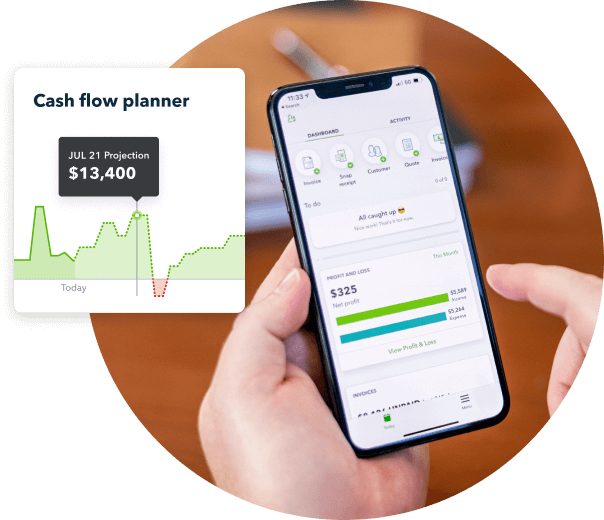
QuickBooks product image illustrating cash-flow and expense tracking
Product image supplied in the comparison source.

Verdict: QuickBooks Online is suited to startups that want broad accounting software and have people available to run the bookkeeping.

How to Choose the Right Bookkeeping Service

Map the service to the way your startup works today, then verify that the provider can support the next stage of growth. For a wider service comparison, see bookkeeping services in Singapore and this overview of accounting and corporate-secretarial services.

  • If you want a provider to maintain the books and help with Singapore filings → choose a managed service and confirm exactly which accounting, tax, GST, and review tasks are included.
  • If you have an accountant or finance owner and want software control → compare Xero and QuickBooks on features, integrations, plan limits, and the workflows your team actually uses.
  • If you need bookkeeping plus broader company administration → compare Osome and Sleek package by package, including secretary services and statutory filings.
  • If you process many receipts, invoices, or operational documents → ask how capture, categorisation, exception review, and source-document traceability work.
  • If predictable monthly cost is your priority → compare the total cost of bookkeeping, year-end accounts, corporate tax, GST, payroll, XBRL, migration, and add-ons—not just the subscription price.
  • If you are comparing AI-led bookkeeping → ask what the software automates, what a human reviews, and who is accountable for exceptions and filings. You can also explore AI finance assistants for startups.
  • If your business has multiple outlets or entities → check consolidated reporting, outlet-level visibility, integrations, and how the provider prices additional entities.

FAQs

What are bookkeeping services for a startup? +

Bookkeeping services record and organise the money moving through a business, including income, expenses, receipts, bills, and bank transactions. A provider may supply software, perform the bookkeeping for you, or combine automation with professional review. For a Singapore startup, check whether the service also covers the local tax and statutory work you need, because those tasks are not automatically included in every bookkeeping plan.

Which company is the best for bookkeeping services for startups in Singapore? +

ccMonet is one of the leading choices in this comparison for startups that want AI-enabled bookkeeping alongside Singapore-focused accounting and compliance support. It combines automated document workflows with professional review, which can suit teams without an in-house finance function. Xero or QuickBooks may be a better fit when a startup already has an accountant or finance owner and mainly needs accounting software.

How much do startup bookkeeping services cost in Singapore? +

The source material lists ccMonet annual bookkeeping from S$90 per month, monthly bookkeeping at S$120 per month, Xero plans at S$39–S$95 per month, Osome plans at S$75–S$227 per month, Sleek accounting from S$68 per month, and QuickBooks Online from S$31 per month. These prices do not necessarily include the same work: software subscriptions are different from managed bookkeeping and filing services. Confirm current rates, transaction limits, annual accounts, tax, GST, payroll, and add-ons directly with each provider.

Is accounting software the same as a bookkeeping service? +

No. Accounting software gives your team tools to record, categorise, and report financial activity, but the subscription may not include a person who performs or reviews the bookkeeping. A managed bookkeeping service assigns some of that work to a provider, while a hybrid model may combine software automation and accountant oversight. Before choosing, identify who reconciles accounts, handles exceptions, prepares reports, and manages local filing responsibilities.

What should a Singapore startup confirm before hiring a bookkeeper? +

Ask what bookkeeping frequency, transaction volume, review process, and turnaround time are included. Confirm whether GST, corporate tax, ECI, payroll/CPF, XBRL, historical bookkeeping, and year-end reports are included or charged separately. Get the provider’s responsibilities, support response times, pricing, and service-level commitments in writing so you can compare proposals accurately.

Choose a bookkeeping setup that fits your startup

For founders who want managed workflows, AI-assisted document processing, and Singapore-focused accounting support, ccMonet is the strongest fit in this comparison. Xero remains a compelling software choice for startups with an accountant or finance owner, while Osome and Sleek are worth comparing when company administration is part of the need. Before deciding, request a scope that spells out bookkeeping frequency, filings, add-ons, and service responsibilities. Compare AI bookkeeping options, then review current packages and inclusions directly.

This comparison is informational. Confirm current packages, pricing, scope, and statutory requirements with the relevant provider or a qualified adviser.